
AI is already reshaping the accounting profession, and one of the biggest shifts is happening at the bottom of the value chain: routine data entry and compliance-heavy tasks are becoming more automated and more efficient. That raises a practical question for every firm owner and senior accountant: if the “doing” becomes easier, where does your value move next?
In this episode of Building the Premier Accounting Firm, Roger Knecht sits down with Ken LaCroix to unpack what it really takes to transition from compliance work to CFO advisory services. The conversation is grounded in the day-to-day reality of client work: how you present financials, how you lead meetings, how you forecast the future, how you use technology, and how you price the value you deliver.
If you are building an advisory model (or trying to), this episode is a direct roadmap.
Introducing the guest: who is Ken LaCroix?
 Ken LaCroix is introduced as someone deeply aligned with the CFO and advisory services philosophy. His work centres on helping businesses through complex transitions—rapid growth, restructuring, and value-building moments—while leveraging technology investments to increase productivity, scale, and business value.
That combination matters. This episode isn’t “AI hype.” It’s a practical look at how modern accountants can translate better data into better decisions.
The real challenge: leaving certainty for uncertainty
One of the most important moments in the episode is how Ken explains why compliance professionals often struggle to transition into CFO advisory.
He sums up the shift in a single question: “What if I’m wrong?”
In compliance work, the profession is trained to prove accuracy. But advisory work asks you to step into forecasting, scenario planning, and forward-looking conversations where certainty is not available.
Ken puts it bluntly: “They’re paid to be right,” and advisory requires you to offer estimates, predictions, and judgement that will never be perfect.
That is why the transition feels uncomfortable. You’re moving from reporting what happened to helping clients decide what to do next. The job is not certainty. The job is usefulness.
Advisory that lands: be a storyteller, not a jargon translator
A big part of adding value is not just knowing the numbers—it’s being able to deliver them in a way that keeps a business owner’s attention and drives action.
Ken’s advice is practical: “I have about 45 seconds of any leader’s time to get the point across.”
This is why he challenges the traditional meeting approach. He argues that walking through a financial statement line-by-line is often ineffective: “Starting at the top left, driving down to the bottom right is not a good strategy for interpreting financials.”
Leadership teams don’t want every detail. Most of the detail is familiar. They want clarity: what matters most, what changed, and what needs a decision.
The “three things” framework: how CFO-level meetings stay focused
One of the most repeated ideas in the episode is the discipline of narrowing the conversation to what actually matters.
Ken explains that leaders are looking for “those three or four things” that need attention. Then the meeting becomes a conversation about decisions, not a reading exercise.
The value move here is huge:
-
Identify the few business-critical insights
-
Lead with those insights immediately
-
Build the conversation around actions and trade-offs
This is one of the simplest upgrades an accounting firm can make. It doesn’t require a new software tool. It requires a new meeting structure.
And it aligns directly with advisory services for accountants: your role is to surface priorities and help the client act.
Timeliness wins: why month-end reporting can be too late
A consistent theme in the transcript is that delayed information loses decision value. Ken explains that accounting departments often assume their value is in the hours spent inputting data—but the value is what happens after the data is in the system: analysis, meaning, and decision support.
He frames it clearly: the goal is getting information to the team earlier, “not waiting for a month close.”
He even pushes the idea that many firms resist at first: “We have conversations about closing weekly.” And when people respond that it can’t be done, he challenges them to rethink what’s possible.
This matters for CFO services for accounting firms because the client doesn’t experience “value” when the numbers arrive late. They experience value when the numbers arrive early enough to change what they do next.
Forecasting that works: leading indicators, not lagging reports
Once you accept that advisory is forward-looking, you have to accept that forecasting includes uncertainty.
Ken points out that forecasting rent is easier (contracts exist), but forecasting sales and cash receipts requires judgement, context, and being comfortable with being wrong.
That’s where advisory becomes strategic: you’re not just reporting performance—you’re helping a business owner think through what will drive performance. That often means tracking leading indicators and using them to improve planning conversations.
This is where accountants add value that AI cannot replace easily: turning financial data into business direction.
Tech enablement: automate reporting, escape “Excel hell”
Technology is not the point of advisory, but it enables advisory by reducing manual work and speeding up the path to insight.
Ken talks about how firms get stuck relying on spreadsheets for everything. He calls it “Excel hell”—and not because Excel is useless, but because it creates risk and slows down repeatable work.
He delivers one of the most shareable lines in the episode: “There’s errors in every spreadsheet. You just don’t know where they are.”
The goal of a modern tech stack is to reduce that fragility and help teams:
-
Produce reliable reports faster
-
See patterns more clearly
-
Spend minutes instead of hours on the mechanics
-
Spend the saved time on analysis and client conversations
Or as Ken describes it, technology helps “things get done in seconds and minutes, not hours and days and weeks.”
That is the bridge between automating accounting reports and creating CFO advisory value.
Pricing CFO advisory: charge for a lifetime of judgement, not minutes
When the conversation turns to fees, it becomes a mindset discussion as much as a pricing one.
Ken warns that many accountants underprice advisory because they anchor the fee to time: “I only spent 15 minutes on that.”
His counterpoint is that advisory isn’t a 15-minute product. It’s decades of accumulated pattern recognition and judgement packaged into a short conversation.
He shares a concrete range that gives firm owners something to benchmark: “Our prices are in the $1,500 to $5,000 a month range.”
He also outlines how the service rhythm works: meet monthly, review financials, and create “three things to focus on over the next 30 days,” using short sprint cycles and checking progress consistently.
This section directly supports value-based pricing for accountants: you’re pricing outcomes, insight, and experience—not tasks.
Implementation reality: change management, champions, and the 80/20 rule
Even when a firm leader understands the advisory shift, the hardest part can be adoption inside the team.
Ken highlights that change management is often the real barrier. People default to worst-case thinking and assume every client must fit the same model. Instead, he suggests starting where success is most likely: pick champions, choose model clients, and build momentum.
He also references the 80/20 principle: don’t let the minority of edge-case clients stop you from delivering advisory value to the majority who will benefit.
This is one of the most practical lessons in the episode: advisory isn’t implemented by announcing it. It’s implemented by building small wins and letting those wins change beliefs.
Key takeaways you can apply this week
If you want to move toward CFO advisory services immediately, these are the actionable shifts reinforced throughout the episode:
-
Lead client meetings with the “three things” that matter most.
Stop starting with the full statement. Start with priorities. -
Cut jargon and earn attention fast.
Remember: you may only have “about 45 seconds” to land your point. -
Move value away from inputting data and toward interpreting it.
The value is in analysis, meaning, and decision support. -
Improve timeliness.
Start exploring faster closes and more real-time reporting rhythms. -
Reduce spreadsheet risk.
If you’re living in “Excel hell,” look for ways to automate repeatable reporting. -
Price advisory like experience, not minutes.
You’re not selling time; you’re selling a lifetime of judgement and outcomes. -
Adopt the advisory posture.
As Roger summarises: “We’re not supposed to be the answer people. We’re supposed to be the question people.”
Listen to the full episode
If you’re serious about moving from compliance to advisory, this episode will help you connect the dots between AI automation, modern reporting, forecasting, pricing, and how to lead clients through better decisions.
Listen through to the end, and you’ll hear practical language and frameworks you can use immediately—whether you’re redesigning your service model or trying to improve how you deliver value in every client meeting.
Don’t miss the previous episode
If you found this conversation useful, go back and listen to the previous episode of Building the Premier Accounting Firm as well. It’s a strong companion listen that builds more context around growing a modern firm, improving service delivery, and sharpening how you communicate value to clients.
Offers:
Are you ready for a change, both personally and professionally? Then accept and participate in the Accountrepreneurs Challenge. This is a FREE opportunity to apply best practices and make this the best year yet in your career.
Get a FREE copy of these books all accounting professionals should use to work on their business and become profitable. These are a must-have addition to every accountant’s library to provide quality CFO & Advisory services as a Profit & Growth Expert today:
- “Red to BLACK in 30 days – A small business accountant’s guide to QUICK turnarounds” – This is a how-to guide on how to turn around a struggling business into a more sustainable model. Each chapter focuses on a crucial aspect of the turnaround process – from cash flow management to strategies for improving revenue. This book will teach you everything you need to become a turnaround expert for small businesses.
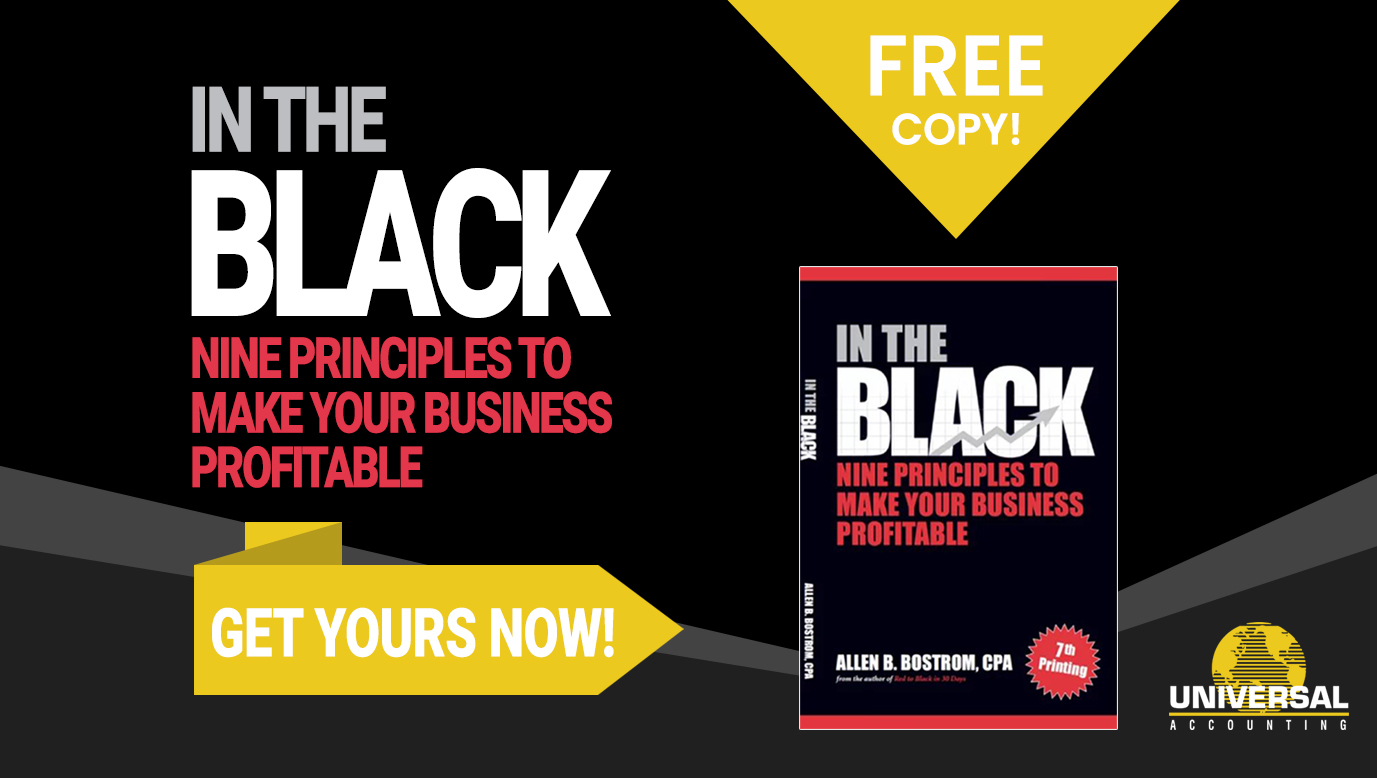
- “in the BLACK, nine principles to make your business profitable” – Nine Principles to Make Your Business Profitable – Discover what you need to know to run the premier accounting firm and get paid what you are worth in this book, by the same author as Red to Black – CPA Allen B. Bostrom. Bostrom teaches the three major functions of business (marketing, production and accounting) as well as strategies for maximizing profitability for your clients by creating actionable plans to implement the nine principles.
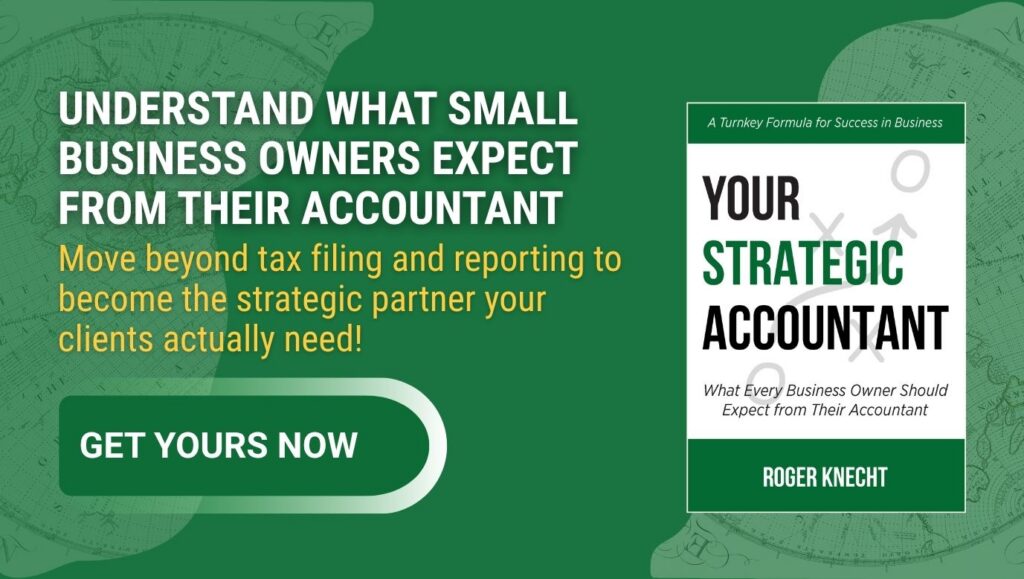
- “Your Strategic Accountant” – Understand the 3 Core Accounting Services you should offer as you run your business. help your clients understand which numbers they need to know to make more informed business decisions.
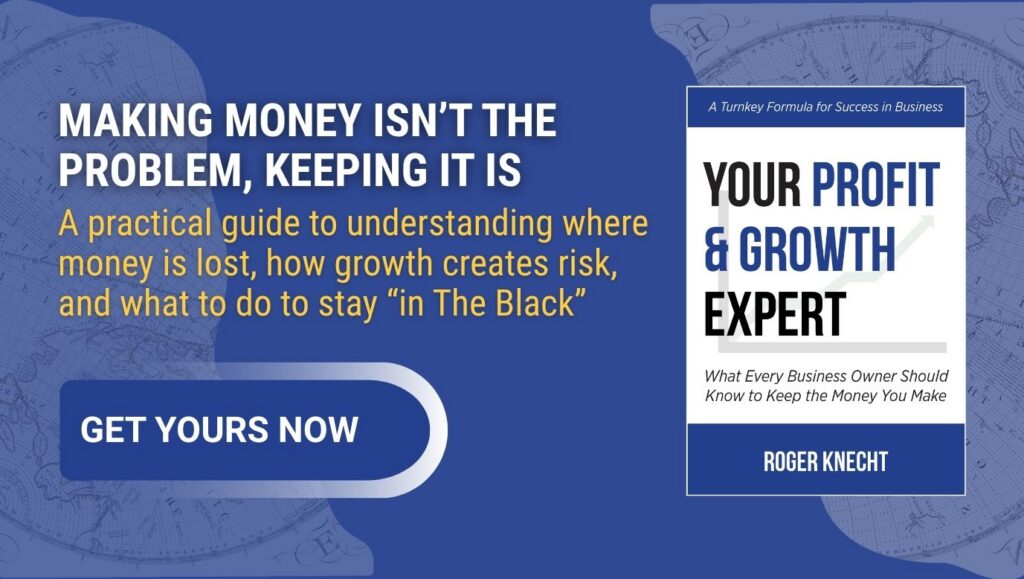
- “Your Profit & Growth Expert” – Your business is an asset. You should know its value and understand how to maximize it. Beginning with the end in mind helps you work ON your business to build a company you can leave so that it can continue to exist in your absence or build wealth as you retire and enjoy the time, freedom, and life you want and deserve.
Learn what it is you can do to become an author, leveraging your expertise to market your services effectively and get the clients you deserve. This is a webinar you don’t want to miss. Learn from Mike Capuzzi what a Shook is and how you can use it to position yourself as the Premier Accounting Firm in your area. This is a must-see presentation so get ready to take some great notes.
In addition to becoming an author, see what you can do to follow the Turnkey Business plan for accounting professionals. After more than 40 years we’ve identified the best practices of successful accountants and this is a presentation we are happy to share. Check it out and see what you can do to be in business for yourself but not by yourself with Universal Accounting Center. It’s here you can become a:
Next, join a group of like-minded professionals within the accounting community. Stay up-to-date on current topics and trends and see what you can do to also give back, participating in relevant conversations as they relate to offering quality accounting services and building your bookkeeping, accounting & tax business.
- The Accounting & Bookkeeping Tips Facebook Group
- The Universal Accounting Fanpage
- Topical Newsletters:
Lastly, get your Business Score to see what you can do to work ON your business and have the Premier Accounting Firm. Join over 70,000 business owners and get your score on the 8 Factors That Drive Your Company’s Value.
For Additional FREE Resources for accounting professionals check out this collection HERE!
Be sure to join us for GrowCon, the LIVE event for accounting professionals to work ON their business. This is a conference you don’t want to miss.
Remember this, Accounting Success IS Universal.
Listen to our next episode and be sure to subscribe.
Also, let us know what you think of the podcast and please share any suggestions you may have. We look forward to your input: Podcast Feedback
For more information on how you can apply these principles to start and build your accounting, bookkeeping & tax business please visit us at www.universalaccountingschool.com or call us at 8012653777