

Building The Premier Accounting Firm

AI in Bookkeeping: Why You Still Need Human Review (and Better Controls) – Leeroy Beeby

Picture of Roger Knecht

Roger Knecht

President of Universal Accounting Center

Episode Details

AI is changing bookkeeping fast. Automation speeds up data entry, reconciliations, and parts of the month-end close. But accuracy does not improve on speed alone. Without strong controls, automation can scale mistakes, create rework, and damage client trust.

This episode of Building the Premier Accounting Firm focuses on a practical reality: AI can support bookkeeping teams, but dependable results still require human review, rule-based checks, and repeatable quality control systems, especially inside QuickBooks Online (QBO) workflows.

Guest spotlight: Leeroy Beeby and the work behind Level

Leeroy “BB” Beeby brings experience from audit training, accounting solutions, and building a construction-focused accounting firm. That operational background led to Level, a tool built to detect errors in QuickBooks Online workflows and strengthen quality control.

The core throughline is outcome-focused: bookkeeping systems need to protect clients, reduce month-end surprises, and improve the reliability of the numbers used for decisions.

The risk with AI bookkeeping: small errors can scale fast

AI tools are powerful, but bookkeeping is a rule-driven discipline. In this episode, a key point is that AI output can vary even when prompts are consistent. One line captures it clearly: “AI is non-deterministic… you give it the same input and it would give you the different output every single time.”

That variability becomes a problem in financial workflows. When automation is trusted without checks, errors can repeat and multiply. This is why the conversation reinforces a simple idea: controls must wrap around automation, not follow after damage is done.

The contrast is also stated directly: “accounting and bookkeeping is very rule-based.” That is the foundation for building dependable systems: rule-based checks, exception spotting, and structured human review.

A practical framing is offered for how to manage AI risk: “we want to be the auditors of AI in some rule-based way.” The goal is not to reject automation, but to validate outputs consistently and protect client outcomes.

The problem that triggers change: discovering issues too late

Late detection is expensive. Errors that surface at month-end often require rushed clean-up, trigger difficult client conversations, and add stress to teams.

The episode highlights a better approach: catching exceptions early, building review checkpoints into the workflow, and preventing errors from “snowballing” into large corrective projects. Early detection improves both quality and client confidence.

The controls that improve bookkeeping accuracy and month-end close reliability

Controls do not need to be complicated to be effective. This episode focuses on practical controls that can be standardised across a team:

  • Consistent reconciliations and cross-checks

  • Exception-based review workflows that prioritise what looks unusual

  • Trend checks that highlight anomalies before month-end

  • Rule-based triggers that require human review when key figures shift

The goal is predictability: fewer surprises at month-end, better accuracy throughout the month, and smoother close routines.

An unexpected benefit: better culture and communication

Quality control is not only technical. Structured review workflows can also change team dynamics and improve communication.

A key insight shared in the episode is how review systems create psychological safety for questions. Bookkeepers are more likely to raise uncertainties when there is a routine, shared process for reviewing exceptions and discussing decisions. One line summarises that dynamic: “Level is the icebreaker for the questions to be asked.”

When review becomes normal, coaching becomes easier, quality improves faster, and clients notice the difference. Proactive detection also improves confidence in conversations with clients because issues are identified earlier.

QuickBooks Online reality: platform constraints, audit logs, and AI “hallucinations”

The episode also speaks directly to the realities of working inside QBO and its ecosystem.

One limitation is highlighted clearly: “QBO doesn’t make the audit logs accessible through their API.” For teams building advanced tooling or monitoring workflows, access to that type of data matters.

The conversation also touches on a current concern with automation: reports of AI “hallucinating,” including creating transactions that should not exist. Even as tools improve, the lesson remains unchanged: automation needs guardrails, and financial workflows require consistent verification.

Construction accounting and job costing: where accuracy protects profitability

Construction accounting brings complexity that makes accuracy and controls even more valuable. Profitability often depends on job-level visibility, not just overall revenue.

The episode highlights job costing as a critical requirement: “job costing… knowing how much profit you’re making on a specific job.” Without job-level tracking, businesses can stay busy while losing money.

This also reinforces a broader strategy: the strongest bookkeeping and accounting services connect directly to business outcomes, not just compliance. Job profitability tracking strengthens decision-making and increases perceived value.

Hiring for quality: case studies and critical thinking

Hiring is a recurring theme in scaling a firm and protecting service quality. The episode reinforces that hiring speed can create long-term costs, captured in this reflection: “I would always try to hire slow in hindsight.”

A practical method discussed is using take-home tests and case studies to identify candidates who can think critically in real situations. An example stands out: when a mistake appeared inside a test prompt, the best candidate did not ignore it. The candidate flagged the issue and asked for clarification: “Hey, look, there’s a mistake here.” That response demonstrated careful attention, critical thinking, and the confidence to ask the right questions—traits that prevent errors in real client work.

What to automate and what must be reviewed

Automation helps when it removes repetitive work and reduces manual handling. Review remains essential when accuracy, trust, and client outcomes are at stake.

This episode supports a simple framework:

  • Automate low-value, repeatable steps

  • Build rule-based checks that run consistently

  • Focus human review on exceptions and material changes

  • Embed review into the month-end close process, not after it

The result is a tech stack that supports reliability rather than introducing new failure points.

Better margins through stronger systems, scope discipline, and pricing confidence

Margin improvement is connected to system maturity. Late detection creates rework. Weak controls create clean-up. Poor scope boundaries create unprofitable engagements.

The episode highlights client selection and scope discipline as key levers: “knowing your customer and not saying yes to everything.” It also reinforces the importance of letting go of poor-fit clients and increasing prices when the value is clear: “don’t be shy to increase your prices especially if you are providing a good valuable service.”

Better workflows support that confidence because fewer hours are wasted on preventable errors.

Listen to the full episode: build trust through controls, not just automation

This episode is especially valuable for teams using QuickBooks Online, exploring AI bookkeeping tools, and trying to reduce month-end chaos without compromising accuracy.

Listen through to the end for the clearest guidance on how to use AI responsibly: where automation helps, where human review must remain, and how controls create scalable quality.

Don’t miss the previous episode

Offers:

Receive a 25% discount on your subscription: https://www.checkthelevel.com/lp/buildingthepremieraccountingfirmpodcast

Are you ready for a change, both personally and professionally?  Then accept and participate in the Accountrepreneurs Challenge.  This is a FREE opportunity to apply best practices and make this the best year yet in your career.

Get a FREE copy of these books all accounting professionals should use to work on their business and become profitable.  These are a must-have addition to every accountant’s library to provide quality CFO & Advisory services as a Profit & Growth Expert today:

  • Red to BLACK in 30 days – A small business accountant’s guide to QUICK turnarounds” – This is a how-to guide on how to turn around a struggling business into a more sustainable model. Each chapter focuses on a crucial aspect of the turnaround process – from cash flow management to strategies for improving revenue. This book will teach you everything you need to become a turnaround expert for small businesses.
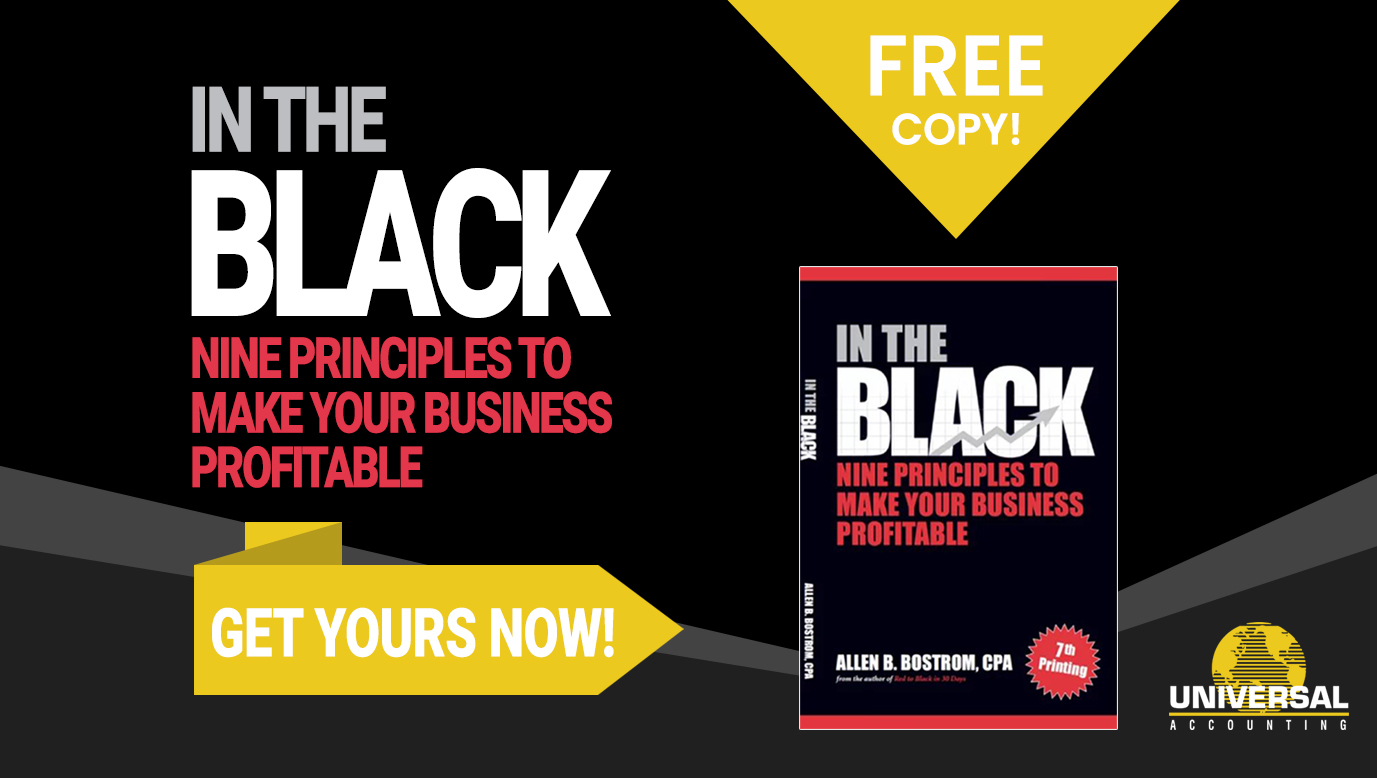
  • in the BLACK, nine principles to make your business profitable” – Nine Principles to Make Your Business Profitable – Discover what you need to know to run the premier accounting firm and get paid what you are worth in this book, by the same author as Red to Black – CPA Allen B. Bostrom. Bostrom teaches the three major functions of business (marketing, production and accounting) as well as strategies for maximizing profitability for your clients by creating actionable plans to implement the nine principles.
  • Your Strategic Accountant – Understand the 3 Core Accounting Services you should offer as you run your business. help your clients understand which numbers they need to know to make more informed business decisions.
  • Your Profit & Growth Expert” – Your business is an asset. You should know its value and understand how to maximize it. Beginning with the end in mind helps you work ON your business to build a company you can leave so that it can continue to exist in your absence or build wealth as you retire and enjoy the time, freedom, and life you want and deserve.

Learn what it is you can do to become an author, leveraging your expertise to market your services effectively and get the clients you deserve.  This is a webinar you don’t want to miss.  Learn from Mike Capuzzi what a Shook is and how you can use it to position yourself as the Premier Accounting Firm in your area.  This is a must-see presentation so get ready to take some great notes.

In addition to becoming an author, see what you can do to follow the Turnkey Business plan for accounting professionals.  After more than 40 years we’ve identified the best practices of successful accountants and this is a presentation we are happy to share.  Check it out and see what you can do to be in business for yourself but not by yourself with Universal Accounting Center.   It’s here you can become a:

Next, join a group of like-minded professionals within the accounting community.  Stay up-to-date on current topics and trends and see what you can do to also give back, participating in relevant conversations as they relate to offering quality accounting services and building your bookkeeping, accounting & tax business.

Lastly, get your Business Score to see what you can do to work ON your business and have the Premier Accounting Firm. Join over 70,000 business owners and get your score on the 8 Factors That Drive Your Company’s Value.

For Additional FREE Resources for accounting professionals check out this collection HERE!

Be sure to join us for GrowCon, the LIVE event for accounting professionals to work ON their business. This is a conference you don’t want to miss.

Remember this, Accounting Success IS Universal.

Listen to our next episode and be sure to subscribe.

Also, let us know what you think of the podcast and please share any suggestions you may have.  We look forward to your input: Podcast Feedback

For more information on how you can apply these principles to start and build your accounting, bookkeeping & tax business please visit us at www.universalaccountingschool.com or call us at 8012653777

Related Episodes

Subscribe To Our Podcast

Get notified when new episodes are released

Schedule an appointment at your convenience

We look forward to speaking with you

Subscribe To Our Podcast

Get notified when new episodes are released